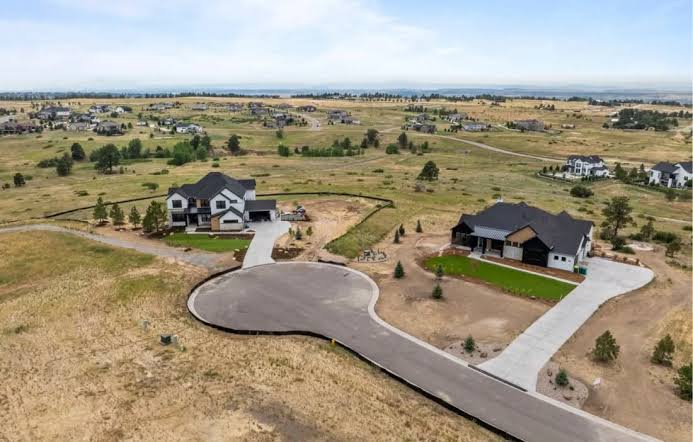
Colorado’s building codes are among the most demanding in the country — not because the state has unusual regulatory preferences, but because the physical environment genuinely requires it. Snow loads, radon exposure, wildfire risk, temperature differentials, and low humidity all impose engineering challenges that don’t exist in most of the country. New homes built to current Colorado codes are substantially more durable and efficient than homes built even fifteen years ago. Here’s what that actually means.
Colorado counties require structural engineering specifications based on local snow load data, which varies dramatically by elevation and micro-climate. A home in Denver must be designed for a 30 pound-per-square-foot roof snow load. A home in Breckenridge must be designed for 125+ pounds per square foot — more than four times the load. This affects roof structure, rafter spacing, truss specifications, and wall framing throughout the structure.
For buyers, this means that identical-looking homes in different Colorado submarkets are built very differently. A mountain home that appears architecturally similar to a suburban Denver home is actually a fundamentally different engineering artifact — with deeper foundations, heavier framing, and specialized roof systems. Builders familiar with both environments handle this well; builders operating outside their home territory sometimes don’t.
Colorado has among the highest naturally occurring radon levels in the United States — the EPA designates the entire state as Zone 1 (highest risk). All new construction in Colorado is required to include passive radon mitigation systems: sub-slab vapor barriers, vent pipes routed to the roof, and electrical rough-ins that allow for fan installation if post-construction testing shows elevated levels.
Buyers should confirm that the radon mitigation system is installed correctly (visible vent pipe, proper cap, slab sealing around all penetrations) and should conduct radon testing within the first 60 days of occupancy. If levels exceed the EPA action threshold of 4 pCi/L, an active fan can typically be added for $400-800.
Wildland-urban interface (WUI) requirements now apply across an expanding portion of Colorado, particularly in foothill and mountain communities. Homes in WUI zones must meet specific requirements for exterior materials (non-combustible siding or ignition-resistant materials), roof assemblies (Class A roofing only), eave construction (enclosed or fireblocked), vents (ember-resistant), and defensible space around the structure.
These requirements add meaningfully to construction cost — typically $15,000-$40,000 depending on home size and specifics — but dramatically improve structure survival rates in wildfire events. Insurance carriers are increasingly pricing coverage (or denying it entirely) based on WUI compliance and defensible space maintenance.
Colorado’s 2024 energy code adoption (based on the 2021 IECC with state amendments) is among the most stringent in the country, particularly for the ResCheck compliance pathway used by most production builders. Requirements include R-21 wall insulation minimum, R-49 ceiling insulation minimum, window U-factors of 0.30 or lower, and duct sealing to 4% total leakage maximum.
The practical effect is that new construction homes in Colorado are genuinely energy-efficient by U.S. standards. Typical annual utility costs for new Colorado homes are 30-50% lower than similar homes built in 2005-2010, and approximately 60-70% lower than homes built in the 1980s.
Homes above 7,000 feet elevation face additional engineering challenges that codes increasingly address. Solar gain is more intense at altitude — requiring better glazing specifications and ventilation. Temperature differentials are more extreme — requiring better insulation and vapor management. Humidity is lower — requiring humidification systems in most quality builds. Freeze-thaw cycles are more frequent — requiring more robust foundation and drainage systems.
Quality mountain builders address these considerations well. Less experienced builders sometimes don’t. This is one of the most important reasons to verify your builder’s track record in the specific altitude range where they’re operating — a builder with 20 years of experience in Loveland may not be the right choice for a home in Telluride.
Licensed Colorado real estate broker and new construction specialist with Home Source Colorado. Helping buyers navigate the new construction and pre-construction market across Colorado.
Our specialists respond within one business day — and the consultation is always free.